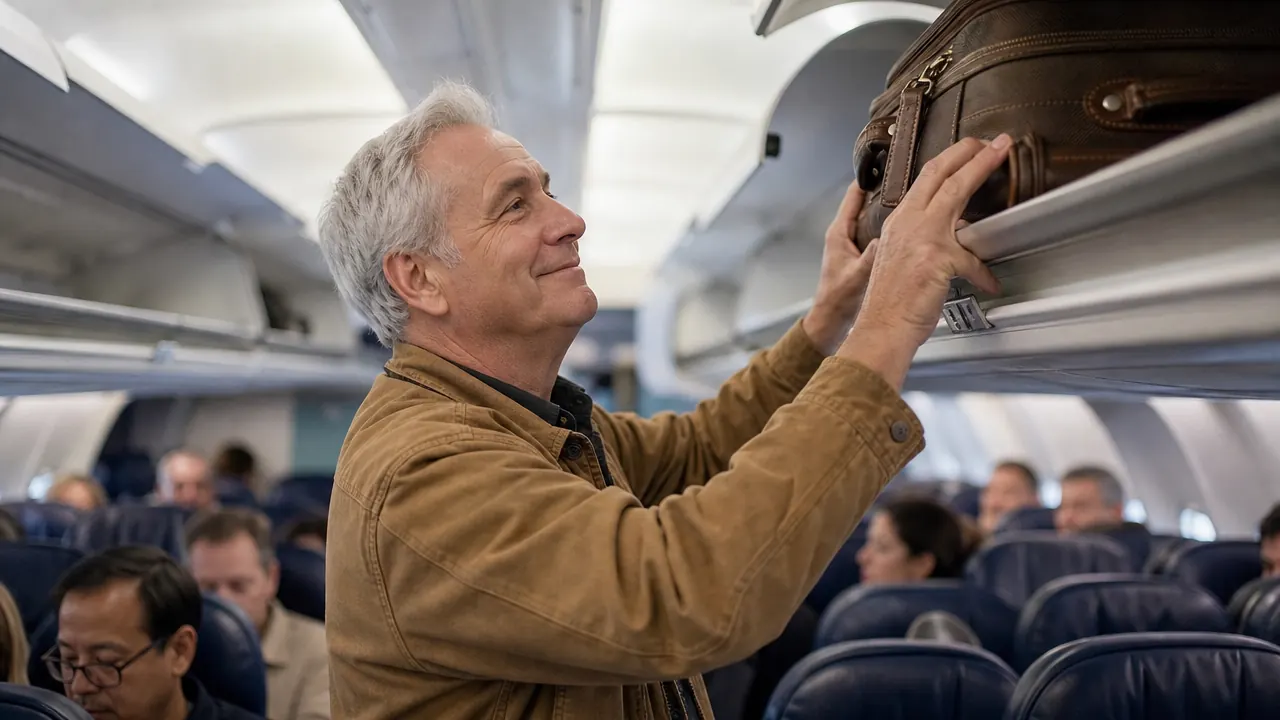
I spent the better part of three decades driving long-haul routes, living out of whatever fit behind the seat or in a small overnight bag at the truck stop motel. You learn fast that hauling more than you need is not freedom, it is weight. Now that I travel for pleasure, I carry that same lesson onto every airplane I board. I have not checked a bag in over two years, and last fall I spent nine nights in Portugal with nothing but a 22-inch carry-on. The whole system lives or dies on one thing: how you organize what goes inside.
Most people who struggle to pack light are not over-packers. They are under-organizers. They stuff clothes directly into the suitcase, everything shifts around in transit, and by day three the bag is a pile of wrinkled chaos that takes ten minutes to dig through every morning. The fix is not packing less, though that helps. The fix is a structure that keeps everything in its place from the moment you zip up to the moment you unpack at your destination.
The system starts with the right packing cubes. These are the ones I use.
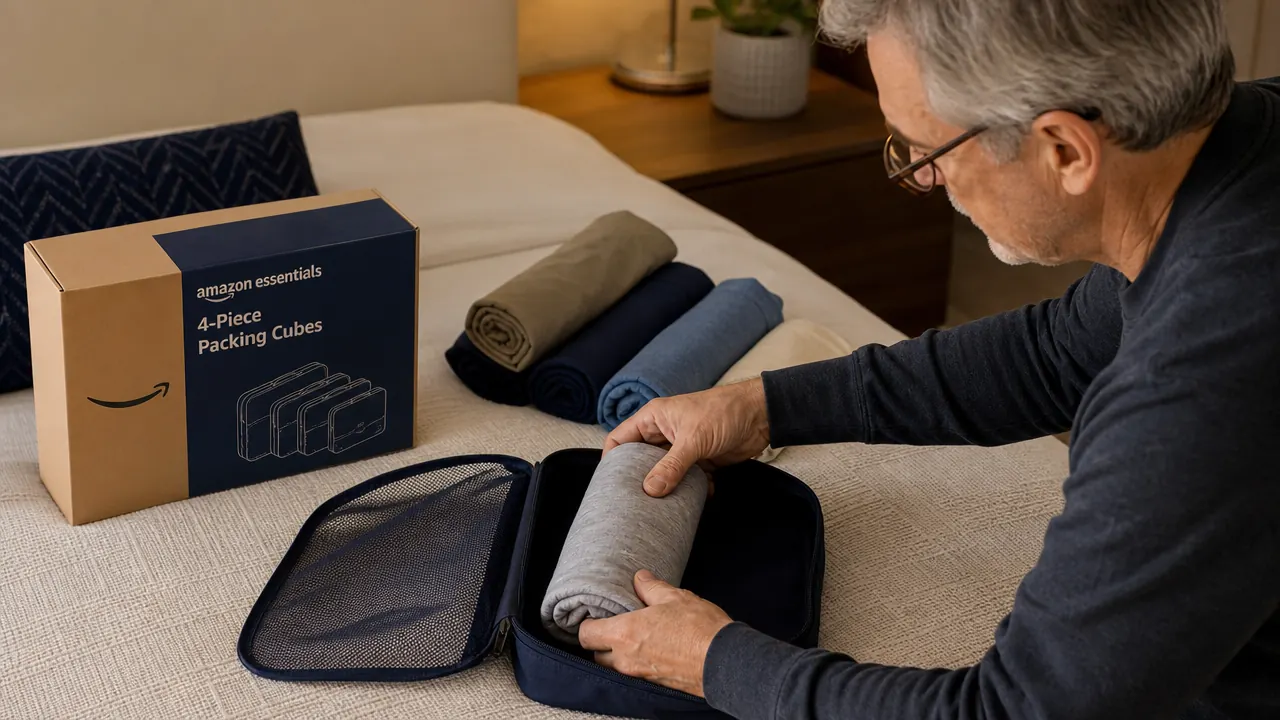
The Amazon Essentials 4-Piece Packing Cube Set runs around fifteen dollars, has a 4.7-star rating from over 43,000 buyers, and fits three medium cubes and one slim cube into nearly any standard carry-on. Check today's price before you start packing.
Amazon Check Today's Price on Amazon →Step 1: Build a Real Packing List Before You Touch a Single Drawer
This sounds obvious, but almost nobody does it right. Grab a piece of paper and write down every day of your trip down the left side. Next to each day, write the specific activity: flight day, dinner out, day at the beach, city walking, whatever you actually have planned. Then fill in one outfit per day. Not a general idea of an outfit. The exact shirt, the exact pants. This forces you to make decisions on paper where they are free and easy, instead of making them at midnight while the suitcase is open on the floor.
When you have your list, look for repeats. If your trip has four casual walking days and two nice dinners, you do not need four separate pairs of pants. Two pairs of versatile pants, one that can work for both dinner and walking, covers you. A good neutral like khaki or dark navy earns its spot every time. Write the final count at the bottom: how many tops, how many bottoms, how many layers, how many pairs of shoes. That number is your budget. Do not pack above it.
Shoes are usually where the list goes sideways. Most people plan three pairs and end up wearing two. For a week-long trip, I bring one pair that handles walking and one pair that handles anything nicer. That is it. Shoes are the heaviest, bulkiest items in the bag. Every extra pair costs you clothing space.
Step 2: Lay Everything Out and Cut It Down by Twenty Percent
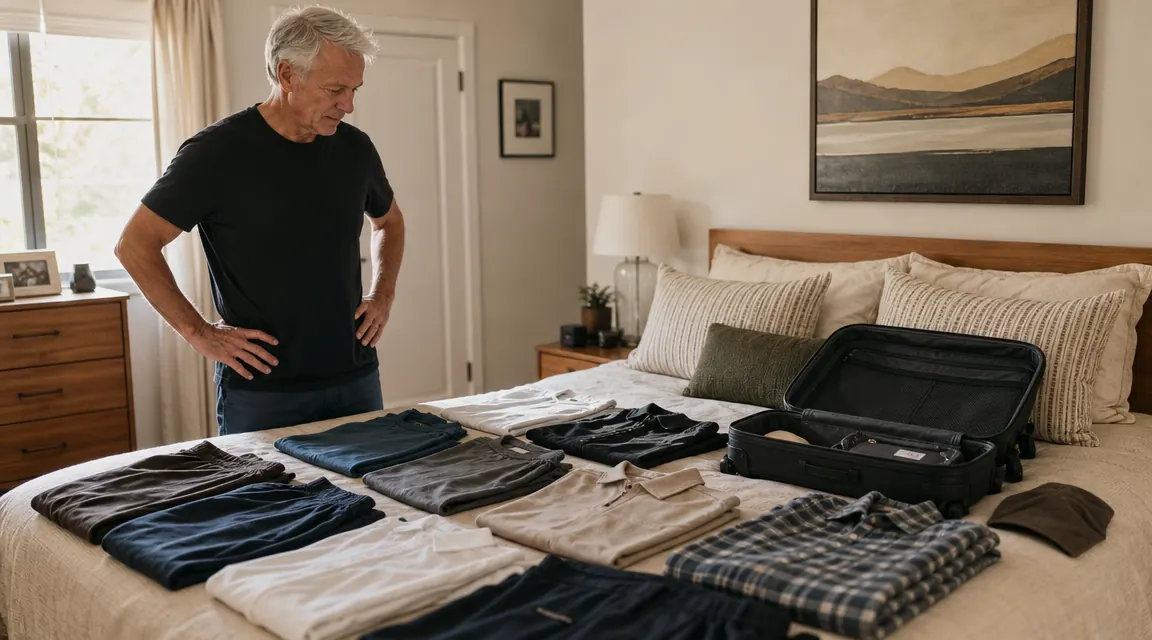
Put your phone camera in selfie mode or set a mirror on the bed. Lay every item from your list flat on the bed in front of you. All of it. Shoes, toiletries, chargers, everything. Now look at it honestly. There will be at least two items in that pile you packed for a scenario that probably will not happen. The backup dress in case you spill something. The third pair of shorts just in case. The blazer for the one dinner that might be nice. Take twenty percent of that pile and put it back in the closet.
The rule I live by: if an item only handles one specific situation on your trip and that situation is optional, it does not make the cut. Clothes that double up earn their spot. A light merino cardigan works as a layer on a cold plane, a cover-up at a restaurant with aggressive air conditioning, and a light jacket on a cool evening. That is three uses in one item. That is the kind of logic that gets you down to carry-on territory.
Step 3: Sort Everything Into Categories and Load Your Packing Cubes
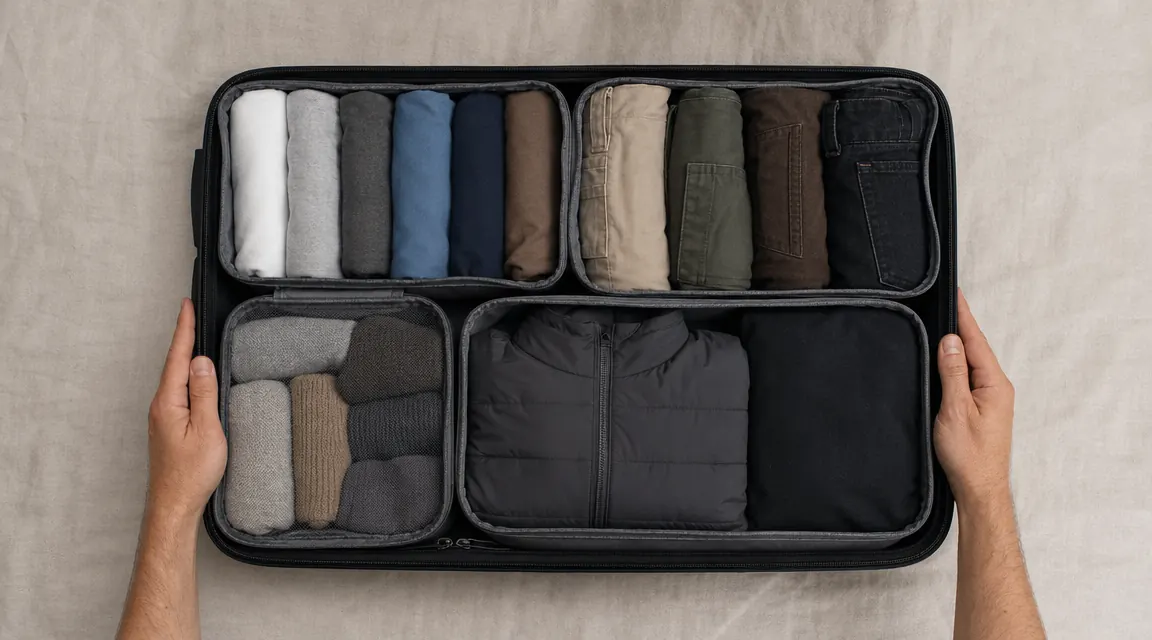
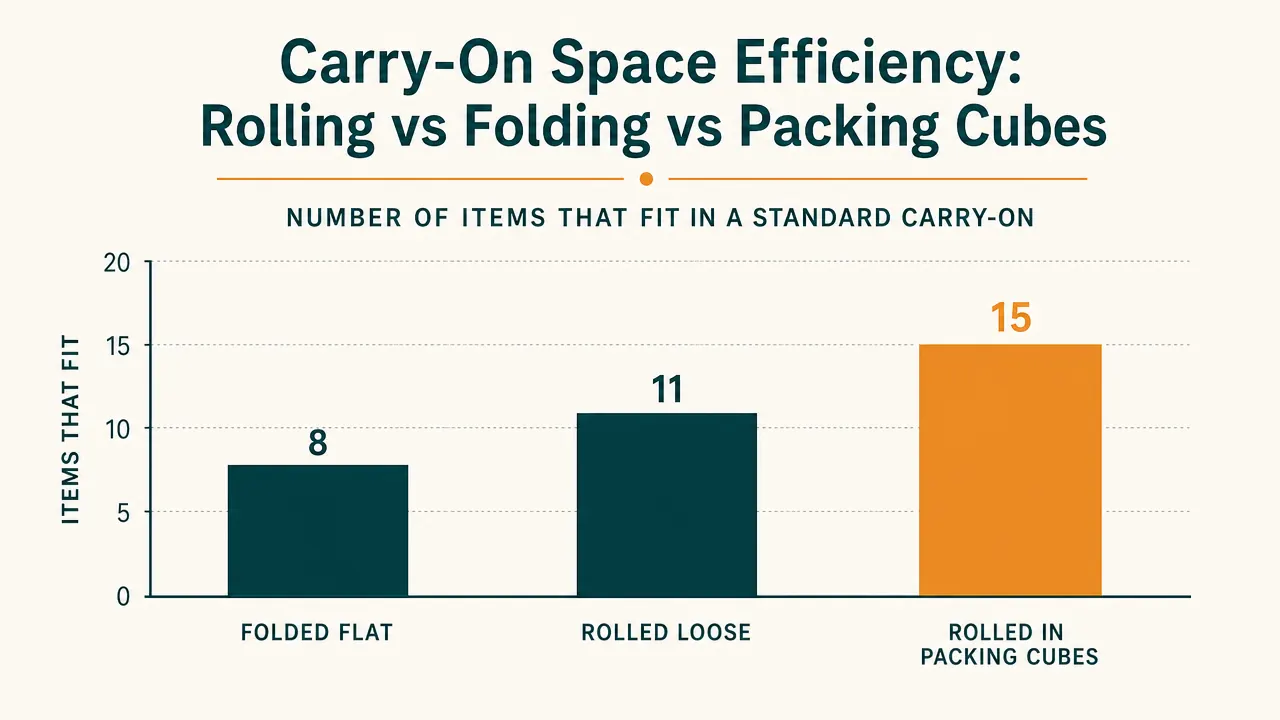
Once the pile is trimmed, sort by category, not by day. Tops together. Bottoms together. Undergarments and socks together. A layer or two together. This is where packing cubes earn their keep. With the Amazon Essentials 4-piece set, I run a simple system: the largest cube holds all my tops, rolled tight. The second medium cube holds bottoms, also rolled. The slim cube holds all my socks and underwear for the whole week. The fourth cube, which I use as an overflow, handles anything that does not fit cleanly into the first three, usually my layer and any lightweight accessories.
Rolling is not just a space trick. It genuinely keeps clothes flatter and more wrinkle-resistant than folding, especially with knits and casual fabrics. For anything that wrinkles easily, like a linen shirt or dress pants, roll loosely and place it on top so it stays on a flat surface. The mesh top panel on the Amazon Essentials cubes is useful here because you can see the contents without unpacking. When you are hunting for something specific in a dark hotel room at 6 a.m., that little detail matters.
Bulkier items that do not compress well, like a light jacket or a pair of jeans, go directly into the suitcase frame rather than into a cube. Cubes are for soft, rollable items. The rigid items act as the skeleton of the bag and the cubes fill in around them. I usually tuck the cubes in tight against one wall of the bag so the other side stays open for shoes, a toiletry bag, and my laptop sleeve.
Step 4: Pack the Bag in the Right Order
Order matters more than people think. Heavy and dense items go flat against the back panel of the bag, the side that rests against the wheels when the bag is upright. That means shoes go in first, heels toward the back. Toiletry bag goes in next, flat and snug. Then your cubes, stacked or laid flat depending on your bag. Lighter items like your layer, a packable rain jacket, or a neck pillow go on top or along the sides where they can flex.
If you are flying with a laptop or tablet, do not bury it under the cubes. Slide it into the sleeve pocket along the front panel if your bag has one, or keep it in your personal item. Security lines move faster when you are not digging through packed cubes to find your laptop. I learned that the hard way in Atlanta when the line was twenty people deep and the agent was not impressed with my excavation.
Zip test your bag before you declare it done. If it closes with resistance, something needs to come out or be rearranged. A bag that is packed to the absolute limit will have a side bulge that makes it harder to fit in overhead bins, especially on regional jets where the bins are smaller than advertised. Leave a little room. You will also want space for anything you pick up on the trip.
Step 5: Use Your Personal Item for Everything You Need Mid-Flight
Your personal item, a backpack or tote that fits under the seat, should hold everything you might want during the flight. Phone charger, earbuds, any medications, a book or tablet, snacks, and a change of clothes if you are connecting through a hub. That last one is the lesson I picked up after an airline lost a checked bag years ago, even though I no longer check bags. Having a full day's outfit in your personal item means if your carry-on is gate-checked on a full flight, you are not stranded without clothes.
Keep the personal item accessible and organized. I use one small zip pouch for all my cords and adapters so I am not untangling a knot of cables when I want to charge my phone. A second small pouch holds travel documents, my neck wallet, and boarding passes. The rest of the bag is loose for easy access. The goal for the personal item is not maximum volume. It is quick access without having to dig.
The bag does not care how many days you are going for. It cares how many items you put in it. Get that number right on paper first, and the rest is just geometry.
What Else Helps When You Are Getting Started
A few things I have picked up after a couple years of carry-on-only travel that did not fit neatly into the steps above. Merino wool is worth the investment for travel. I own three merino t-shirts, two merino polos, and a merino cardigan, and those six items cover nearly every casual and semi-dressy scenario I encounter. Merino does not wrinkle, does not hold odor, and dries overnight in a hotel bathroom sink. On a week-long trip, you can re-wear a merino shirt after 24 hours of regular use without anyone noticing, including yourself. That alone cuts your top count roughly in half.
For toiletries, I use a set of small refillable silicone bottles that sit in a single quart-size zip bag per TSA rules. Everything I need for a week fits in that one bag. Full-size bottles are luggage killers. They are heavy, they take up real estate you need for clothes, and half the time the airline loses the bag you checked specifically because it had your full-size shampoo in it. The quart bag system takes about ten minutes to learn and saves you an enormous amount of trouble at security.
Finally, weigh your bag before you leave the house if you have any doubt. Most carry-on bags are limited to 22 pounds on domestic flights, though that limit varies by airline and class. A small digital luggage scale costs under fifteen dollars and takes the guesswork out of it completely. I know a man who re-packed his bag four times in an airport parking garage because he did not weigh it at home. Do not be that man.
Ready to try the packing cube system for yourself? Here is where to start.
The Amazon Essentials 4-Piece Packing Cube Set is rated 4.7 stars by more than 43,000 travelers, costs about fifteen dollars, and is the single best organizing upgrade you can make before your next trip. If you are serious about carry-on-only travel, this is step one.
Amazon Check Today's Price on Amazon →